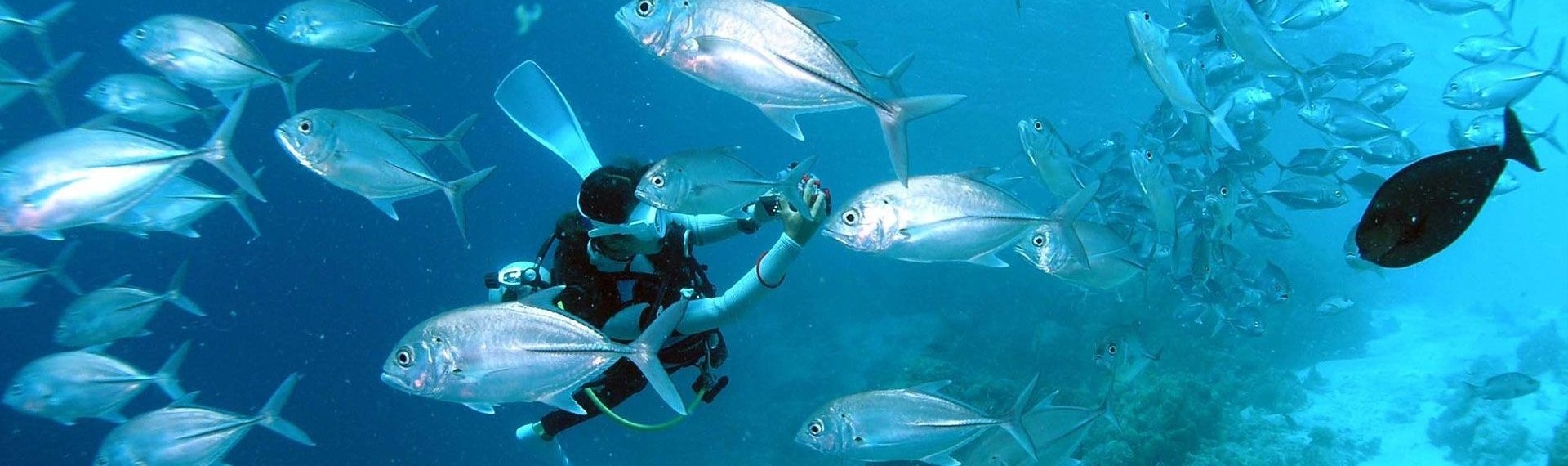
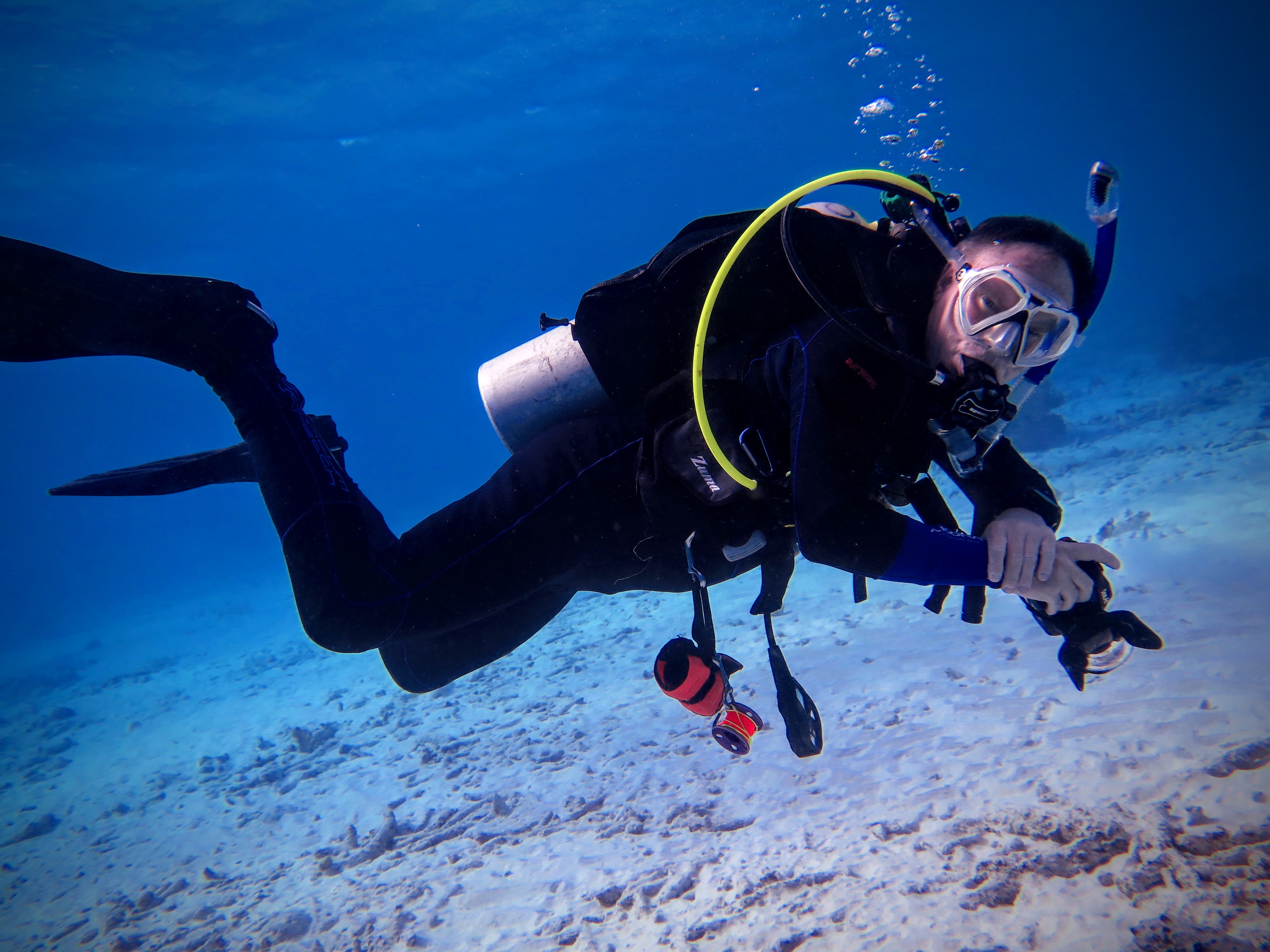
Now is the time to dive into the PADI Open Water Diver course, the most popular dive program in the world! This is your ticket to a lifetime of intense adventure with PADI, the dive company that sets the standards in the global diving community.

Life's too short... Get Wet!
Now is the time to dive into the PADI Open Water Diver course, the most popular dive program in the world! This is your ticket to a lifetime of intense adventure with PADI, the dive company that sets the standards in the global diving community.
PADI eLearning Open Water Diver:If you’re looking for a flexible way to fit a scuba certification into your busy schedule or if you just prefer web based learning, then PADI’s online scuba courses are the way to go. You can get started immediately with scuba knowledge development and work at your own pace using the PADI learning system. Once you have completed your online classroom, call The Dive Shop to complete you pool sessions. |
Forms:As with all things, of course there is paperwork to be completed before your course can start. Please note any "Yes" on the medical form requires a doctor sign off prior to you entering the course. Medical Form |
PADI Open Water Diver:As a certified PADI Open Water Diver, the most widely recognized and respected rating in the world, you have the freedom to dive with a buddy independent of a professional. If you already tried a PADI Discover Scuba Diving experience or are PADI Scuba Diver certified, check with your instructor to see how credit from these courses may apply to the open water program. What do I need to start?Virtually anyone who is in good health, reasonably fit, and comfortable in the water can earn a PADI Open Water Diver certification. You must be older than the age of 14 to begin the PADI Open Water Diver program. For those of you who are not above the age of 14 and would like to participate in the PADI Open Water Diver Program, then the PADI Jr Open Water Diver program is available to you. If you are between 10 and 14 or have a child between these ages, there is a PADI Junior Open Water Diver program available. A PADI Jr Open Water Diver between the ages of 10 and 11 years may only dive with a PADI Professional, a certified parent or certified guardian to a maximum depth of 12 meters/40 feet. What will I do?Throughout the course, you’ll learn fundamentals of scuba diving, including dive equipment and techniques. You earn this rating by completing five pool dives and knowledge development sessions and by making four open water (ocean or lake) dives. How long will it take?The PADI Open Water Diver course is incredibly flexible and performance based, which means we can offer the program on a wide variety of schedules, and paced according to how fast you progress. It’s possible to complete your confined and open water dives in as few as three or four days (provided you take care of reading the manual and watching the video ahead of time). However, many people prefer a more leisurely schedule, for this we offer semi-private or private courses. Contact us for further information. 1. Knowledge Development This develops your familiarity with basic principles and procedures. You learn things like how pressure affects your body, how to choose the best gear and what to consider when planning dives. You complete Knowledge Development on your own, reading each of five sections of the PADI Open Water Diver Manual and watching the corresponding section of the PADI Open Water Diver Video (which also previews skills you’ll learn). If you like learning with a personal computer, you can also get the Open Water Diver Manual and Video together as a CD-ROM You briefly review what you studied in each section with your instructor and take a short quiz to be sure you’re getting it. At the end of the course, you take an exam that makes sure you’ve got all the key concepts and ideas down. 2. Confined Water Dives This is what it’s all about diving. You develop basic scuba skills in a pool. Here you’ll learn everything from setting up your gear to how to easily get water out of your mask without surfacing. You’ll also practice some emergency skills, like sharing air just in case. Plus, you may play some games, make new friends and have a great time. There are five confined water dives, with each building upon the previous. Over the course of these five dives, you attain the skills you need to dive in open water. 3. Open Water Dives After your confined water dives, you and the new friends you’ve made continue learning during four open water dives with your PADI Instructor at a dive site. This is where you have fun putting it all together and fully experience the underwater adventure at the beginner level, of course. You may make these dives near where you live or at a more exotic destination on holiday. What is a Dive Computer?Scuba Diving has been around for 50+ years and computers have not, so odiously the traditional approach of using tables that stipulate the maximum allowable time for given depths works. But, computers have become standard equipment because they provide several HUGE advantages over tables. They're easier to use, help offset human error, allow for more underwater time and various computers offer extra features . Our class rooms use the PADI Computer Diving Simulator (access code is supplied with your open water crewpak) for you to learn how to use a computer and access at home. For certification dive a computer is available for rent for $5.00 per day and we have special prices to purchase your own during class. Classroom and Pool Training - $229.00
|
Special price for students who sign up for an Open Water Class and Pool that run on Weekdays. Monday & Wednesday or Tuesday & Thursday
Dive Computer:During your open water class, both classroom and certification dives you can purchase a dive computer for this special price. Oceanic VEO 2.0
|
PADI National Geographic Open Water Diver:Join an elite group of divers who are more than tourists, but explorers, adventurers and conservationists. The fun part about the PADI National Geographic Diver certification is the opportunity to participate in an exploration project. You'll learn to observe and explore like an underwater scientist. What do I need to start?Virtually anyone who is in good health, reasonably fit, and comfortable in the water can earn a PADI National Geographic Open Water Diver certification. You must be older than the age of 14 to begin the PADI Open Water Diver program. If you are between 10 and 14 or have a child between these ages, there is a PADI Junior Open Water Diver program available. Your quest for adventure can’t begin without the knowledge to navigate through the waters. The National Geographic Diver Crew-Pak is an all-encompassing tool kit including everything you’ll need to complete PADI’s Open Water Diver certification program. Additionally you’ll receive a bonus DVD giving you an in-depth perspective on the underwater world from international National Geographic explorers. The National Geographic crewpak also includes a deluxe logbook including a durable National Geographic binder and full-size pages for dynamic logbook entries. What will I do?Throughout the course, you’ll learn fundamentals of scuba diving, including dive equipment and techniques. You earn this rating by completing six pool dives and knowledge development sessions and by making six open water (ocean or lake) dives. How long will it take?The PADI Open Water Diver course is incredibly flexible and performance based, which means we can offer the program on a wide variety of schedules, and paced according to how fast you progress. It’s possible to complete your confined and open water dives in as few as three or four days (provided you take care of reading the manual and watching the video ahead of time). However, many people prefer a more leisurely schedule, for this we offer semi-private or private courses. Contact us for further information. 1. Knowledge Development This develops your familiarity with basic principles and procedures. You learn things like how pressure affects your body, how to choose the best gear and what to consider when planning dives. You complete Knowledge Development on your own, reading each of five sections of the PADI Open Water Diver Manual and watching the corresponding section of the PADI Open Water Diver Video (which also previews skills you’ll learn). If you like learning with a personal computer, you can also get the Open Water Diver Manual and Video together as a CD-ROM You briefly review what you studied in each section with your instructor and take a short quiz to be sure you’re getting it. At the end of the course, you take an exam that makes sure you’ve got all the key concepts and ideas down. 2. Confined Water Dives This is what it’s all about diving. You develop basic scuba skills in a pool. Here you’ll learn everything from setting up your gear to how to easily get water out of your mask without surfacing. You’ll also practice some emergency skills, like sharing air just in case. Plus, you may play some games, make new friends and have a great time. There are six confined water dives, with each building upon the previous. Over the course of these five dives, you attain the skills you need to dive in open water. 3. Open Water Dives After your confined water dives, you and the new friends you’ve made continue learning during six open water dives with your PADI National Geographic Instructor at a dive site. This is where you have fun putting it all together and fully experience the underwater adventure at the beginner level, of course. You may make these dives near where you live or at a more exotic destination on holiday. As part of the National Geographic Diver Specialty course, you fine-tune your buoyancy, then set off on your exploration project. Whether it’s a survey of plant life or a study of water temperature variation, this project is your chance to think, observe and document like those who dive for science and discovery. On your next dive you’ll hone your navigation skills, then dive into an aquatic life exercise which may also be part of your exploration project. What is a Dive Computer?Scuba Diving has been around for 50+ years and computers have not, so odiously the traditional approach of using tables that stipulate the maximum allowable time for given depths works. But, computers have become standard equipment because they provide several HUGE advantages over tables. They're easier to use, help offset human error, allow for more underwater time and various computers offer extra features . Our class rooms use the PADI Computer Diving Simulator (access code is supplied with your open water crewpak) for you to learn how to use a computer and access at home. For certification dive a computer is available for rent for $5.00 per day and we have special prices to purchase your own during class.
Classroom and Pool Training - $269.00
|